
 Español
 Français
 Deutsch
 Português
 Italiano
 Nederlands
 日本語
日本語 한국어
한국어 中文
中文 العربية
Why I built Plant-Maxxing
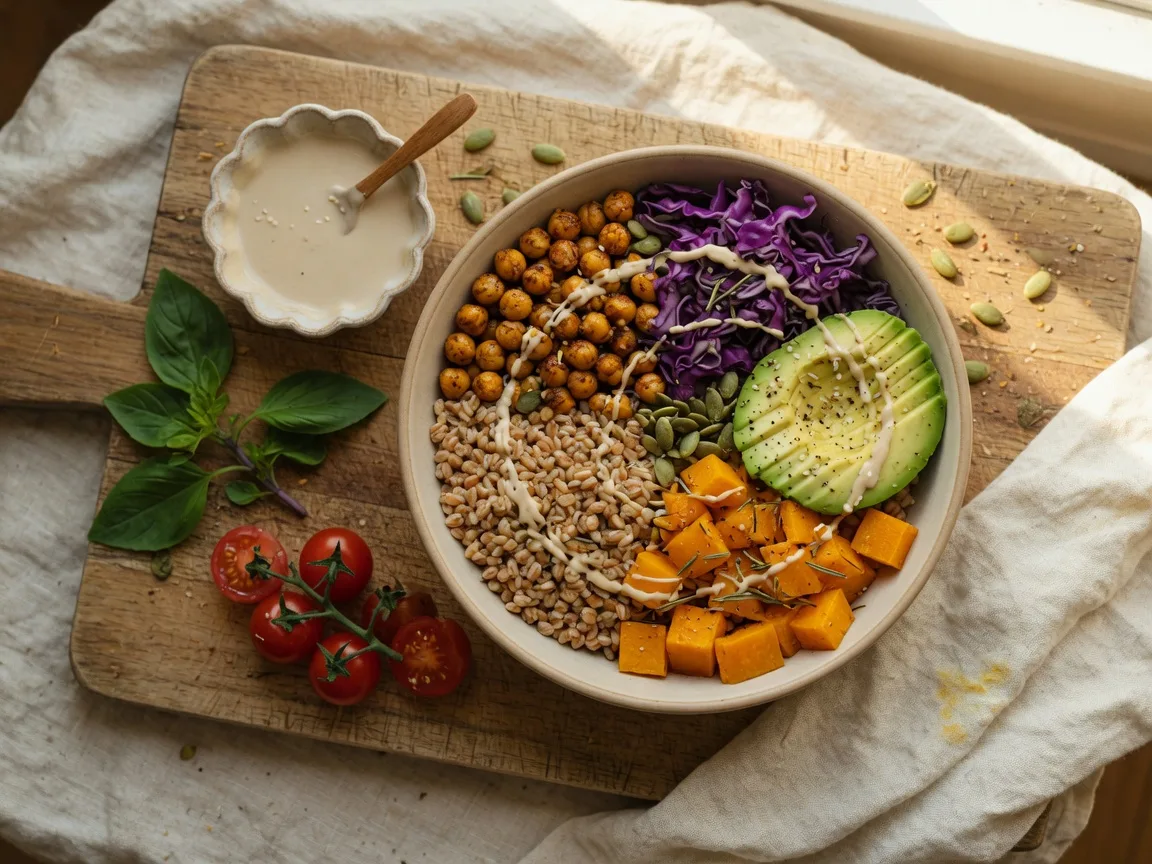
I went mostly plant-based three years ago. First week I felt like a philosopher: tofu, lentils, oats, the whole colorful lineup. Second week I felt like an accountant. Every meal ended with me staring at a food tracker, running arithmetic I didn't quite trust.
The story you hear online is simple. Just hit your protein grams. Hit 1.6 grams per kilo of bodyweight, the chorus said, and you're done. So I hit them. A scoop of pea protein in the morning, a bowl of lentils at lunch, tofu at dinner. The numbers added up. The arithmetic told me I was winning.
Then I actually looked at the numbers.
The part most trackers skip
A gram of protein is not a gram of protein. Each plant food has a limiting amino acid, the one that runs out first and caps how much of the rest your body can actually use. Legumes (lentils, chickpeas, beans) come up short on methionine. Grains, nuts and seeds come up short on lysine. So if your entire lunch is a mountain of lentils, you can eat 40 grams of "protein" on paper and your muscles still won't get the full 40 grams of usable building blocks.
It's like buying forty bricks and losing ten to a hole in the bag.
Then there's leucine. Muscle protein synthesis, the thing you actually care about if you want to stay lean, strong, or simply not dissolve into a fine mist by age sixty, runs on a switch. That switch is leucine, and it generally doesn't flip until you hit roughly 2.5 to 3 grams of it in a single meal. Spread the same total protein across six snacks and you get a softer signal. Concentrate it and you get a real one.
The real game isn't total grams. It's completeness, then leucine, then total grams. In that order.— the part I wish someone had told me in year one
The classic fix is older than gyms
Rice and beans. Hummus and bread. Lentils and rice. Peanut butter on whole-grain toast. Every culture that eats mostly plants figured this out centuries ago. Beans bring the lysine. Grains bring the methionine. Together they complete each other, and the meal's usable protein goes up substantially, without you eating a single extra gram of "protein."
For about a year I did this math by hand. Or by spreadsheet. Or by texting a friend who's a registered dietitian and watching her sigh. None of it scaled. I'd be at a restaurant trying to estimate lysine-to-methionine ratios in my head, which is a deeply unsexy thing to do on a date.
A worked example, last Tuesday
Here's an actual lunch I ate. Nothing boutique. Pantry stuff, fifteen minutes:
- 1 cup cooked black beansLysine-rich. Methionine-light. 15g protein
- 1 cup cooked brown riceMethionine-rich. Lysine-light. 5g protein
- 100g firm tofuFairly complete. Contributes leucine. 12g protein
- 1 tbsp nutritional yeastSneaky amino-acid insurance. 3g protein
- Fistful of spinach, squeeze of limeFlavor, iron, folate. Not a protein source, and that's fine. ~1g protein
On paper that's about 35 grams of protein. Scored for completeness and leucine together, it lands as a genuinely high-quality meal, around 3g of leucine, no single amino acid bottlenecking the rest. That's the plate you want after a workout. Not 35g of "protein" from one source that dies at methionine.
Contrast: the same 35g from a single source, say a big bowl of lentils and nothing else, scores worse on usability even though the label says the same number. The label is a ceiling, not a floor.
So I built the thing I wanted
Plant-Maxxing does one job, and it does it fast. You take a photo of your meal. It identifies the protein sources, scores the meal for amino-acid completeness against the leucine threshold, and tells you the single highest-leverage thing to add. Not a forty-page report. One sentence.
"Add a quarter-cup of pumpkin seeds, you're short on methionine." Or: "This is already complete, enjoy it." That's the whole product.
I built it because I was tired. I kept building it because it actually changed how I eat, not in a restrictive way, in a smarter one. I throw seeds on things I used to eat plain. I stopped pretending a giant salad was a protein meal. The arithmetic is finally out of my head and back in the kitchen where it belongs.
If you've been quietly doing the same math, or more likely quietly not doing it and hoping for the best, this is for you.